
Everything About Strep Throat
Ever had a fever, difficulty in swallowing, rash, and a sore throat? Chances are, you experienced a mild strep throat. Strep throat is an infection caused by group A bacteria. This bacterial infection causes you to feel pain in your throat and a mild inflammation in the throat area. Because of the inflammation, patients experience difficulty while eating foods, drinking water or beverages, and swallowing. All of these symptoms usually start to show within 2 to 5 days of infection. After that time period, the infection slows down and goes away after 7 to 10 days.
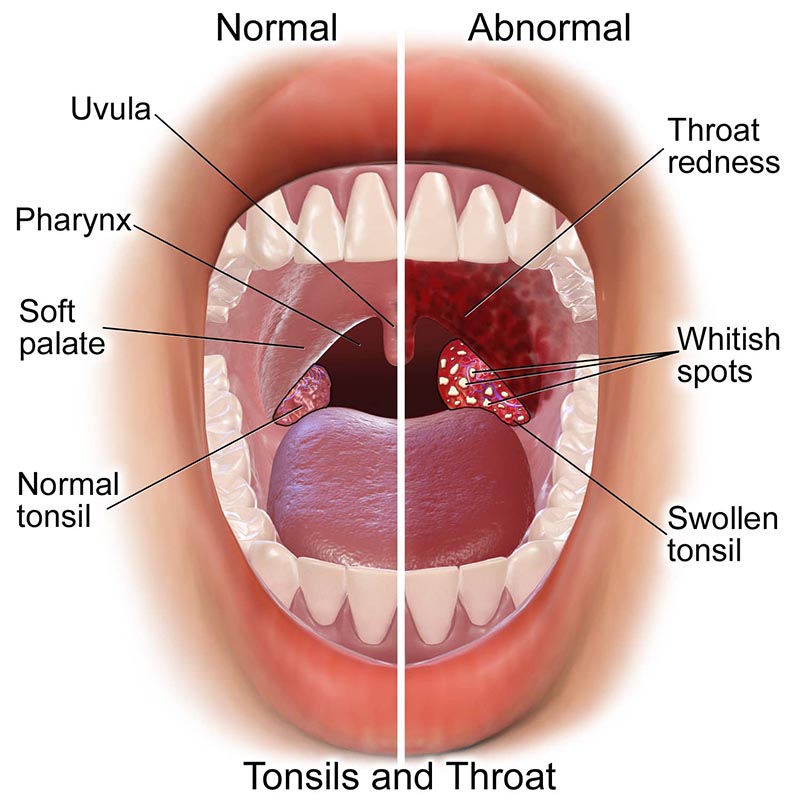
During this period, the patient should see a doctor, and after the diagnosis, he/she should isolate himself/herself from the crowd. You can still go out in public, but you need to use a highly protective mask. The reason for this is to ensure nobody else gets this infection.
Is Strep Throat Contagious?
As you guessed it already, strep throat is a highly contagious infection. Just like COVID-19 (although less contagious), when a strep throat positive patient coughs or sneezes, bacteria spreads to the surroundings of the patient, and particles stay in the air for a couple of hours. This makes the infection an airborne one.

If, by any chance, you make contact with these particles and touch your nose, eyes, or mouth, you might get strep throat infection. You can also get infected if you kiss another person who is positive and if you share your food/beverage with a strep throat positive person. You can still be contagious even before you show the symptoms, as it takes a few days to develop the symptoms. After that, once you start your antibiotic treatment, you will stop being contagious after 2 days. If you don’t use them, you will stay contagious for up to 3 weeks.
Strep Throat Antibiotics?
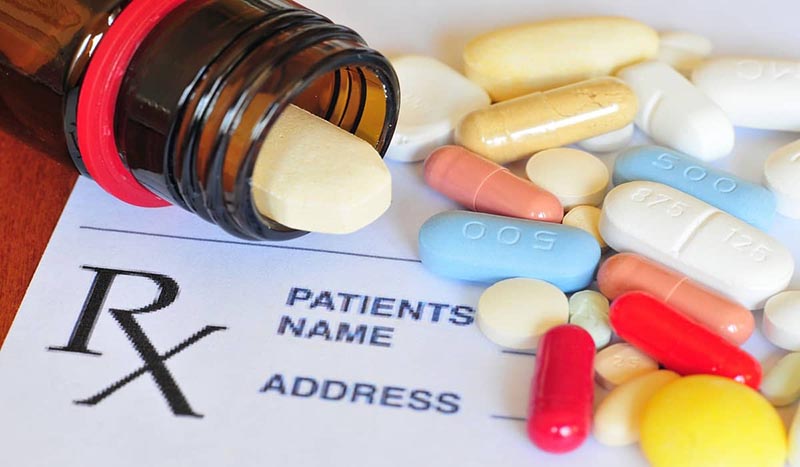
You don’t necessarily need to use antibiotics to beat this infection. Our body can naturally overcome this illness in approximately 7 to 10 days. However, not taking medicine greatly extends the lifetime of the infection. You will stay contagious for 3 weeks if you don’t take antibiotics. Compared to 3 weeks, if you decide to take the medicine, you will stop being contagious after just a couple of days. Not to mention that you are gonna feel better in a shorter amount of time. Because of these factors, it’s advised to take the healthier option and use antibiotics.
How Can We Not Infect Others?
This is something that we know deeply because of the whole COVID-19 issue. Even though strep throat infection is not lethal like COVID, we should still take some precautions. Some of these are:
- Avoid touching your face at all times.
- Use hand sanitizer.
- Try to wash your hands as much as you can.
- Try to isolate yourself for a couple of days.
- When going out to a crowded place, wear a mask.
- Don’t hug or kiss anybody for at least 3 days.

If you pay attention to these little details, you will be doing yourself and the general public a favor.
Strep Throat Symptoms
Since we pass over the contagious and recovery parts of the infection, we can give more detailed information about the signs of strep throat. If you check the multiple factors below, you will know more about the symptoms and what to do if you think you have it.
NOTE: Strep throat symptoms in kids are the same in every other age group.
- A high level of fever.
- Difficulty in swallowing food.
- Red and inflamed throat (much like a cold).
- Headache.
- Feeling cold around the hands and feet.
- Red and white marks inside the throat, a common image of strep throat tongue.

If you experience more than one of these symptoms, you should visit a doctor immediately. Your doctor will check your throat for inflammation and other signs of strep throat infection. Once you are diagnosed, your doctor will prescribe antibiotics and will give you a 2-day home rest.
Sore Throat Remedies
In the meantime, you can drink tea or other soothing variations of it. Some of these are honey, garlic, lemon, ginger, peppermint, and lavender. These can help with your throat pain and swallowing problems to an extent. You should also drink lots of water as your body will need lots of liquids. If you feel too much pain or extreme headaches, you can take a pain reliever. But before taking the pain reliever, you should check in with your doctor.

Strep Throat and Common Cold Comparıson
A common cold also shows similar signs, and it might be confusing for someone to know which one they really have. In this case, there is a small trick that shows the difference between the two. If you have a runny nose that gets blocked every minute, it means you have a cold. A runny nose is not a symptom of strep throat. The most obvious signs of a common cold are having a runny nose, coughing and sneezing regularly, feeling down and extreme fever. You don’t really cough and have nasal blockage while dealing with strep throat.

If you pay attention to these two small factors, you will have a much better clue about what you are dealing with. In any case, it’s best to go to a doctor and take treatment as soon as possible to prevent this infection’s contagious characteristic.
Severe Cases Of Strep Throat
Just like with every infection or virus, there are always severe cases that face dangerous situations. If you don’t take medication and your body can’t fight the infection, there will be some complications. Some of these complications are rheumatic fever and scarlet fever. Rheumatic fever affects our entire joints, some parts of the skin, and the heart. If left untreated, it can potentially cause high levels of damage. Scarlet fever also causes are skin to create strep throat-like rashes on all of our body. These two are obviously extreme cases and only happen under extreme conditions.

If you don’t respond well to your antibiotics or if you are dealing with another sickness at the same time, always tell these details to your doctor and take your medication without missing a dose. That way, you can get over this mild infection without causing any harm to your body.
Summary
Strep throat is a highly contagious infection that affects every age group. It creates problems that occur at the upper side of the body, mainly in the mouth area. However, it can travel to other body parts via multiple ways. Strep throat is not deadly. It’s an infection that our body can fight off. Antibiotics are recommended for a quicker and safer treatment plan. The average strep throat goes away after a week of antibiotic use. The patient should only go out after he/she is fully healed and no longer infectious.